Polycystic Ovaries (PCO) and Polycystic Ovary Syndrome (PCOS)
PCO and PCOS are one of the most common reasons General Practitioners refer patients to Professor John Eden at the Women’s Health and Research Institute of Australia (WHRIA). Polycystic ovaries (PCO) are commonly mistaken for polycystic ovary syndrome (PCOS). The name is not an accurate description of the condition as the fluid filled structures in the ovaries associated with PCO are not technically cysts. Ovaries contain follicles, which are where the ova develop, and they are naturally filled with fluid. PCO is diagnosed if the follicles behave abnormally. Abnormal behaviour is characterised by a greater number of follicles developing at the one time, usually more than twelve, and are arranged into a circle. Normally only two to five follicles develop at the one time and they are scattered throughout the ovary. Polycystic ovaries are also larger and have a slightly different appearance.
Women with PCO do not necessarily have PCOS. Polycystic ovary Syndrome is a combination of PCO and a series of symptoms. These symptoms often include excess bodily hair, acne and other skin problems, scalp hair loss, irregular or missing periods, heavy periods, fertility problems, insulin resistance, and weight issues. PCO does not cause pain in the pelvic area. If pain is experienced this is most likely due to a cyst which usually disappear without treatment. Surgical treatment is a last resort if cysts persist. PCO does not need to be treated surgically.
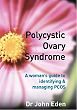
The information concerning PCO and PCOS available to the public, particularly on the internet, is often sensationalised and inaccurate. Professor John Eden (MB BS MD UNSW, FRCOG, FRANZCOG, CREI) has published an easy to understand and up to date book where you will find accurate information about what PCO and PCOS is, causes, diagnosis, tests, fertility, insulin resistance, and the benefits of diet and exercise in relation to these indications.
For information on how to purchase Professor John Eden’s book, "Polycystic Ovary Syndrome: A Woman’s guide to identifying and Managing PCOS",
contact WHRIA on 1300 772 206 or purchase a copy online from the
POSAA online shop.